
Loofah Seeds How to Grow
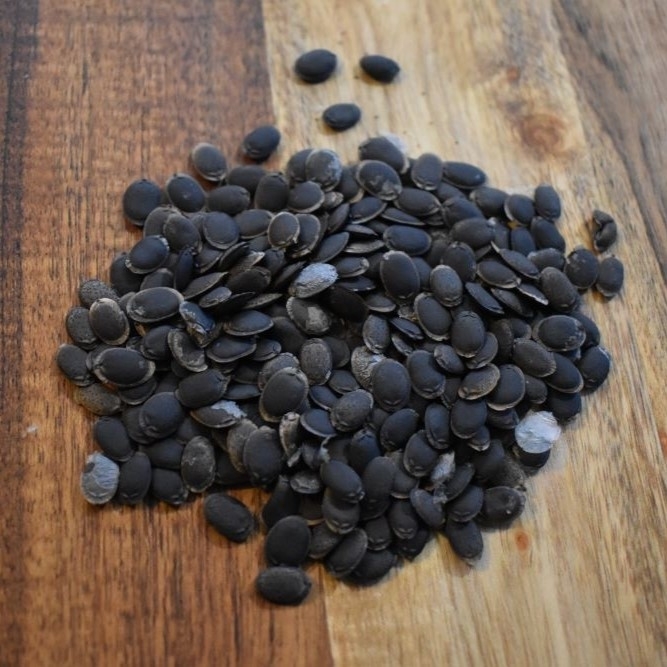
In this article we cover how to prepare and sow loofah seeds (botanically known as luffa).
Timing is everything as you to need a long growing season of about 180-190 days for loofah seeds. This means you may have to start your seeds indoors to protect them from the cold weather and plant out once the weather warms up. If you have access to a heat pad this helps with the seed strike rate and to grow strong healthy seedlings.
Choosing The Best Seed
Pick the fattest, darkest seeds out of the bunch to give yourself the best strike rate. The white ones are from underdeveloped luffa and are no good.
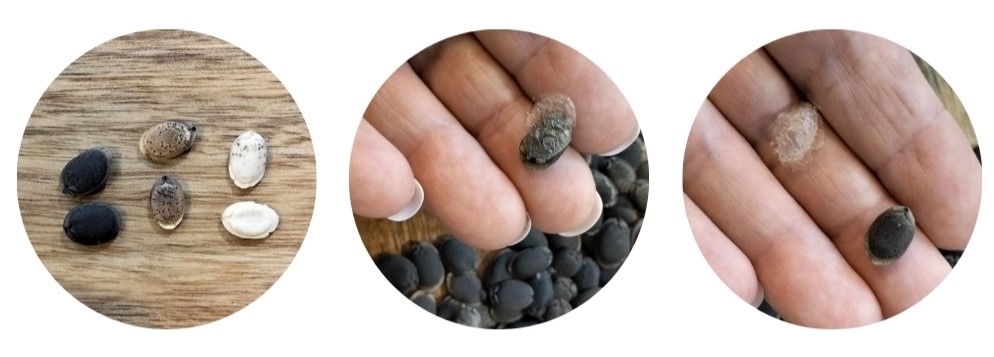
You may see a thin papery skin on some of the seed you can literally just wipe this off with your finger. It's the seed skin from when it sat inside the luffa fruit.
Preparing The Loofah Seed For Sowing:
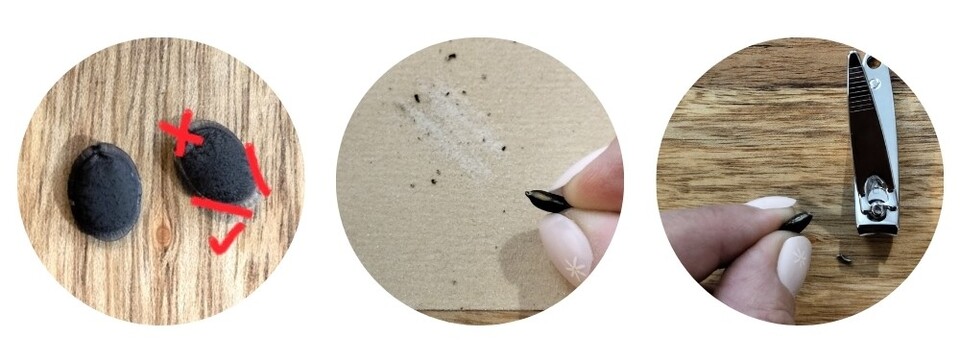
First we want to scarify the seed. There are three ways that you can do this: 1) you can use sandpaper to sand a corner of the seed off or 2) you can clip a corner of the seed with nail clippers or 3) you can soak in warm water overnight. We always opt for soaking in warm water overnight as it is the easiest when working with hundreds of seeds. Scarify the rounded end of the seed on either side not the pointed end as you may damage the loofah seed.
Soaking The Loofah Seeds
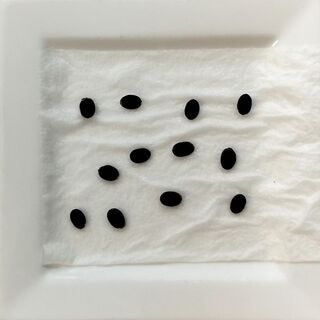
The soaking method works well for us overall with about a 70% strike rate.
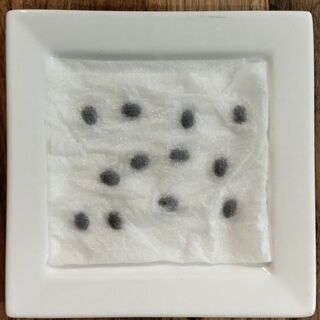
Place the seeds in a paper towel on a saucer with some warm water and cover overnight for around 12 hours and this will soak them enough to soften the seed shell and make it easier for the seedling to break through.
Sowing Loofah Seeds
Once the seeds have been soaked you can take one seed and put it in a small nursery pot filled with good quality seed raising mix. Plant about a half inch down with the seed facing either upright or flat. We use a PB three quarter which is the equivalent to a 4 inch or 1 quart pot in the US. One seed per pot is best. The pot needs to be big enough that the loofah seedling can stay in for at least two to four weeks but that it’s small enough so the warmth can help the seed germinate and the seedling can grow. I don’t use seed raising trays and sow all together because 1) there is not enough growing space in such a short tray and 2) they really don’t transplant well so we save ourselves a step of potting on by sowing in something that the loofah seedling can spend weeks in.
Germination can take 7 to 14 days. If nothing is happening after three weeks there may be a problem with either it’s not warm enough, the seed wasn’t soaked enough, there has not been enough moisture or the seed was planted too deep and it is still growing to the surface.
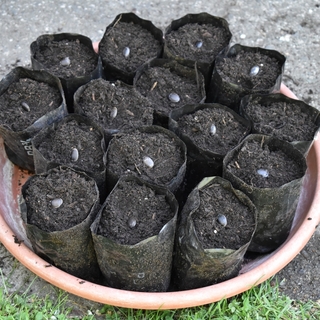
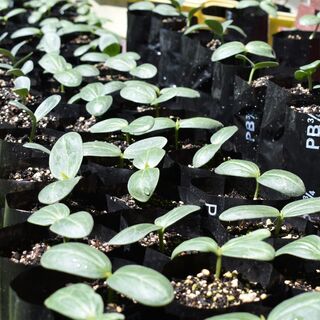
In our cooler climate loofah seeds and plants are very fussy and any chance not to strike or the plant to not have the peak conditions they won’t make it so I do sow plenty of extras so I have backups.
Keep the soil moist and place in a warm sunny area. The key is keeping them warm, so depending on your climate this could be indoors on a sunny windowsill, in a greenhouse or glass house or outdoors under the eaves (like on a balcony) against the wall where the frost can’t get them but the sun and heat from the wall reflect back onto seed pots helping to create heat in the daytime. Or you can use a clear plastic storage bin where you take the lid in the sunlight and put back in the evening or if it starts to rain. Loofah like warm temperatures and they will not grow if it is too cold, this is where a heat mat indoors has a huge advantage.
Hardening of the seedlings.
Before your loofah seedlings can move into their permanent outdoor spot, they need a little time to adjust to the real world. Seedlings that have been grown indoors are used to stable temperatures, filtered light, and still air — outside is a whole different story. Hardening off is simply the process of gradually introducing them to outdoor conditions over 7 to 10 days. Start by placing them outside in a sheltered, shaded spot for just a couple of hours on day one, then slowly increase their time outdoors and exposure to direct sun each day. Bring them in if temperatures drop or if strong wind or heavy rain is forecast. By the end of the process, they should be spending the full day outside and tolerating direct sun without wilting or scorching. Skipping this step is one of the most common reasons newly transplanted loofah seedlings struggle — a little patience here goes a long way.
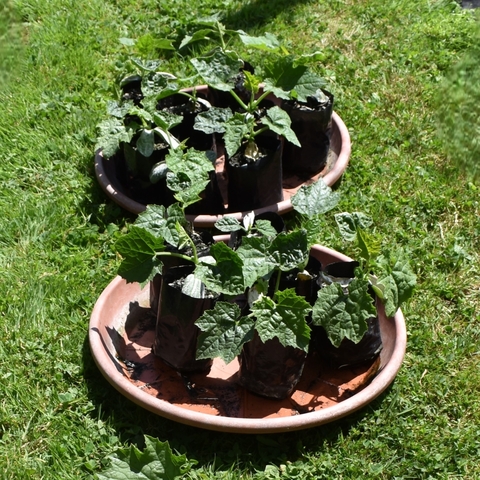
If you live in a warm climate – You can plant loofah seeds direct into the ground and not worry about the transplanting steps if your soil temp is up around 65 to 70°F (18 to 20°C).
Once you have grown your first lot of loofahs you’ll never need to buy seeds again, there are hundreds of seeds per loofah.
Happy growing!